Chasing Your Tail: Why Trying to Win Back Losses Faster Than You Lost Them Usually Doubles the Damage
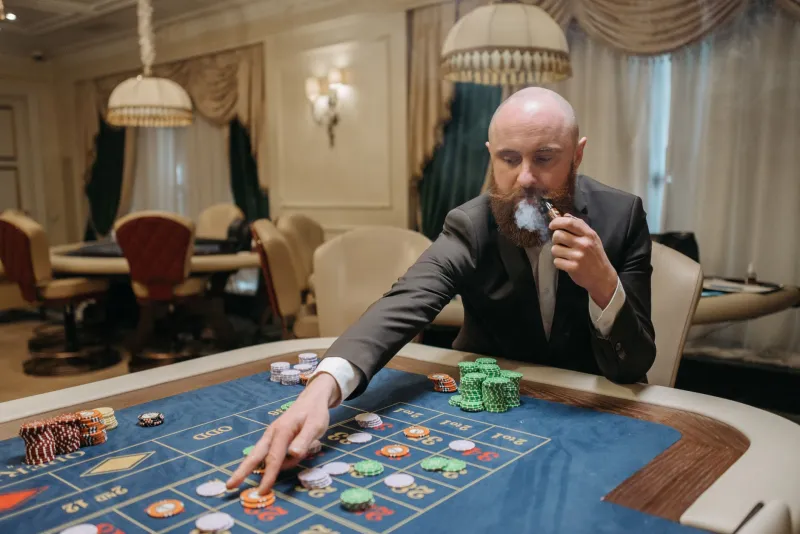
There's a specific kind of frustration that only gamblers know. You're down a few hundred, the session has gone sideways, and somewhere in the back of your head a voice whispers: just go harder. Bigger bets, faster games, higher variance — if you lost it fast, maybe you can win it back just as fast.
That voice is not your friend.
What it's describing has a name in gambling psychology circles: accelerated recovery. And while it sounds almost reasonable — efficient, even — it's one of the most reliable ways to turn a manageable loss into a genuinely painful one. Let's break down exactly why the urgency to get even is the enemy of actually getting even.
The Brain on Loss Mode
When you take a significant hit at the tables or on the slots, your brain doesn't respond neutrally. Loss aversion — a well-documented cognitive bias — means humans feel the sting of a loss roughly twice as intensely as the pleasure of an equivalent gain. So a $300 loss doesn't just feel bad. It feels disproportionately bad, in a way that demands action.
That demand for action is where things get dangerous. The prefrontal cortex, responsible for rational planning and impulse control, starts losing ground to the limbic system — the emotional, reactive part of your brain that just wants the pain to stop. The result is a mental state that's genuinely impaired for decision-making, even though it feels laser-focused.
You think you're being strategic. You're actually running on emotional fumes.
The Accelerated Recovery Trap
So what does accelerated recovery actually look like in practice? It usually shows up in a few recognizable patterns:
Upsizing bets mid-session. You were playing $10 hands of blackjack. Now you're playing $50 hands because you need to make up ground faster. The house edge hasn't changed, but your exposure to variance has multiplied.
Switching to higher-volatility games. You drift from table games to high-RTP slots or video poker variants with massive jackpot swings. The logic is that a single big hit could wipe the slate clean. The reality is that high-volatility games are just as likely to accelerate your losses as reverse them.
Extending sessions past your original limits. You planned to play for two hours. It's been four. You're tired, you're frustrated, and your decision-making quality has dropped significantly — but you haven't hit your mental recovery target yet, so you keep going.
Each of these moves feels purposeful. Each of them is statistically working against you.
Why Speed Is the Wrong Metric
Here's the uncomfortable truth that no one really wants to hear: the casino has no recovery timeline. The house edge operates across every single bet, every single session, indefinitely. When you try to compress your recovery into a shorter window by betting bigger, you're not outsmarting that edge — you're giving it more surface area to work with.
Think about it this way. If you lost $400 over two hours of normal play, the math that produced that loss was doing its thing at a certain rate. If you now try to recover $400 in 30 minutes by tripling your bet size, you haven't changed the underlying math. You've just made the potential downside proportionally larger. A bad run at $150 a hand hits very differently than a bad run at $25 a hand.
The house doesn't care how badly you need to get even. It just keeps collecting its percentage.
The Sunk Cost Illusion
Part of what fuels revenge gambling is a classic cognitive distortion: the sunk cost fallacy. The money you've already lost feels like it's still in play somehow — like it's sitting just out of reach and can be reclaimed with enough effort. But it can't. That money is gone. It's not waiting for you on the other side of a bigger bet.
Every new bet you place is a fresh, independent decision. The $300 you lost an hour ago has zero influence on whether your next hand wins or loses. The roulette wheel doesn't know you're down. The slot machine doesn't owe you a comeback.
Once you genuinely internalize this — not just intellectually, but emotionally — the logic of accelerated recovery starts to collapse. You're not recovering anything. You're just placing new bets with a worse mental state and a depleted bankroll.
What Realistic Recovery Actually Looks Like
Sustainable recovery from a bad session isn't about speed. It's about structure. Here's a framework that actually holds up:
Stop the session. Full stop. If you've hit your loss limit — and you should have one set before you ever sit down — the session is over. Walking away isn't weakness. It's the single most profitable decision you can make when you're in the red and emotional.
Give it time. Not hours. Days, sometimes. The urgency you feel to recover is a symptom of the emotional state you're in, not a signal that now is a good time to play. Let that urgency cool down completely before you plan your next session.
Return at your normal stakes. When you do play again, play at the same level you always do. Not higher, not lower. Your next session should look exactly like it would have if the bad session had never happened. This is harder than it sounds, but it's the only approach that keeps variance working in a manageable range.
Track everything. The players who recover most effectively over time are the ones who keep honest records. Not just their wins — everything. A written log forces perspective that your memory, which is heavily biased toward emotional moments, simply can't provide.
Time Is Part of the Strategy
The most counterintuitive thing about smart gambling recovery is that time is an active ingredient, not a passive one. Waiting isn't doing nothing — it's allowing your decision-making capacity to reset, your emotional state to normalize, and your perspective on the loss to recalibrate.
The players who consistently manage their bankrolls well over months and years aren't the ones who found a clever way to win back losses fast. They're the ones who stopped treating recovery as an emergency and started treating it as a process.
Getting even is a fine goal. Just don't let the urgency to get there quickly be the thing that makes it impossible.